
Nervous System Pathology
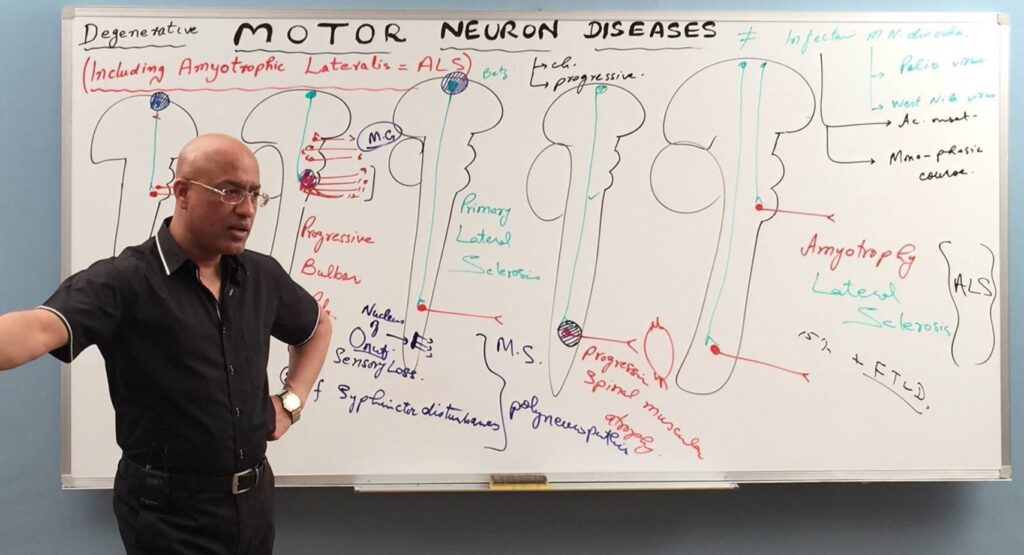
Some of the most examined neurological conditions start at a single synapse or a single membrane. This focused course takes three of them and teaches them well. In six hand-drawn lectures, Dr. Najeeb explains how antibodies disrupt the neuromuscular junction in myasthenia gravis and Lambert-Eaton syndrome, then follows bacterial meningitis from the route of infection to the cerebrospinal fluid findings. The course is taught by a teacher with over 40 years of experience.
| At a glance | Nervous System Pathology |
|---|---|
| Teacher | Dr. Najeeb, over 40 years of teaching experience |
| Number of lectures | 6 video lecture parts in 2 modules |
| How it is taught | Live whiteboard drawing, one idea at a time |
| Where to begin | No background needed; the lectures begin with the neuromuscular junction |
| Plan | Lifetime access with the premium plan, future lectures included |
| Handwritten notes | Handwritten notes for every lecture, sold separately (Notes add-on or Combo Plan) |
| Sample lectures | Sample lectures through a free “Try Us Free” account |
| Suited to | Medical, dental, nursing and physiotherapy students; USMLE Step 1, PLAB, COMLEX and NEET PG candidates |
A clearer way into nervous system pathology
A short course on the highest-yield nervous system diseases is the fastest route to a firm grasp of them.
- The neuromuscular junction is drawn first, so both antibody diseases can be reasoned out.
- Myasthenia gravis and Lambert-Eaton syndrome are contrasted on the same axes.
- Meningitis is explained through the pathology, which makes the CSF findings logical.
- Handwritten notes for every lecture give you a clear revision set.
Topics at the heart of the course
- Explain the pathology of myasthenia gravis
- Explain the pathology of Lambert-Eaton syndrome
- Contrast the two neuromuscular junction disorders
- Describe the pathology of acute pyogenic bacterial meningitis
From lecture hall to ward
- Fatigable weakness and ptosis
- Paraneoplastic neurological syndromes
- Cerebrospinal fluid findings in meningitis
- Neck stiffness and fever
- Thymic abnormalities in myasthenia gravis
Step-by-step outline (6 parts)
| Module | Topics (number of lecture parts) | Parts |
|---|---|---|
| 1. Neuromuscular junction disorders | Myasthenia Gravis (2); Lambert-Eaton Syndrome (1) | 3 |
| 2. Meningitis | Acute Pyogenic Bacterial Meningitis (3) | 3 |
Total: 6 lecture parts.
Who this course serves best
- Medical students revising neurological disease
- Nursing and physiotherapy students who care for neurological patients
- Anyone who wants a short, focused review before an exam
- Candidates preparing for USMLE Step 1, PLAB, COMLEX or NEET PG
The course is short enough to complete in one or two study sessions.
A study plan that works
- Watch the neuromuscular junction lectures first.
- Compare myasthenia gravis and Lambert-Eaton syndrome in a table.
- Memorize the CSF pattern of bacterial meningitis by understanding its cause.
- Review from the handwritten notes.
These courses connect naturally with Nervous System Pathology: Neuro Anatomy and Neuro Physiology for the nervous system in depth, Membrane Physiology for the neuromuscular junction and action potential, Clinical Medicine for neurological cases such as Brown-Sequard syndrome, Microbiology for the bacteria that cause meningitis and Immunology for autoantibody-mediated disease.
Key nervous system pathology concepts in a minute
What causes myasthenia gravis?
Myasthenia gravis is caused by autoantibodies against postsynaptic acetylcholine receptors at the neuromuscular junction. It produces fatigable muscle weakness, often with ptosis, and is associated with thymic abnormalities.
What causes Lambert-Eaton syndrome?
Autoantibodies target presynaptic voltage-gated calcium channels, reducing acetylcholine release. It is often paraneoplastic, especially with small cell lung cancer, and weakness may improve briefly with repeated use.
How do myasthenia gravis and Lambert-Eaton syndrome differ?
Myasthenia gravis is a postsynaptic disorder that worsens with repeated use. Lambert-Eaton syndrome is a presynaptic disorder in which strength may temporarily improve with exercise.
What are the common causes of bacterial meningitis?
In neonates, group B streptococci and Escherichia coli are common. In older children and adults, Streptococcus pneumoniae and Neisseria meningitidis are the leading causes.
What are the CSF findings in bacterial meningitis?
The CSF typically shows a high neutrophil count, raised protein and low glucose, and the opening pressure is often elevated.
What are the classic signs of meningitis?
The classic features are fever, headache and neck stiffness. Kernig and Brudzinski signs may be positive.
Questions students ask most
Do I need prior knowledge before starting nervous system pathology?
No. The lectures start with the neuromuscular junction, so a beginner can follow them. If you already know the topic, they work as a quick revision.
How many nervous system pathology lectures can I watch?
The course contains 6 lecture parts organized into two modules.
Which topics does the nervous system pathology course cover?
It covers myasthenia gravis, Lambert-Eaton syndrome and acute pyogenic bacterial meningitis.
Can I try some lectures before I buy?
Yes. Sign up for a free Try Us Free account, watch the sample lectures, then decide whether to upgrade.
Do the lectures come with notes?
Yes. Handwritten notes are available for every lecture in this course. They are sold separately through the Notes add-on or the Combo Plan.
How long do I keep access to the lectures?
With the premium plan you keep access permanently, and new lectures are included at no extra cost.
Can I watch the lectures offline?
Offline access is limited to the official Dr. Najeeb Lectures app, and the videos cannot be saved as standalone files.
Will this course help with USMLE, PLAB, COMLEX or NEET PG?
It covers the nervous system pathology content that these exams test. It does not include a question bank or a certificate.
Can I get a refund?
Refunds are available within 7 days. Email support@drnajeeblectures.com and the team will help.