
Microbiology
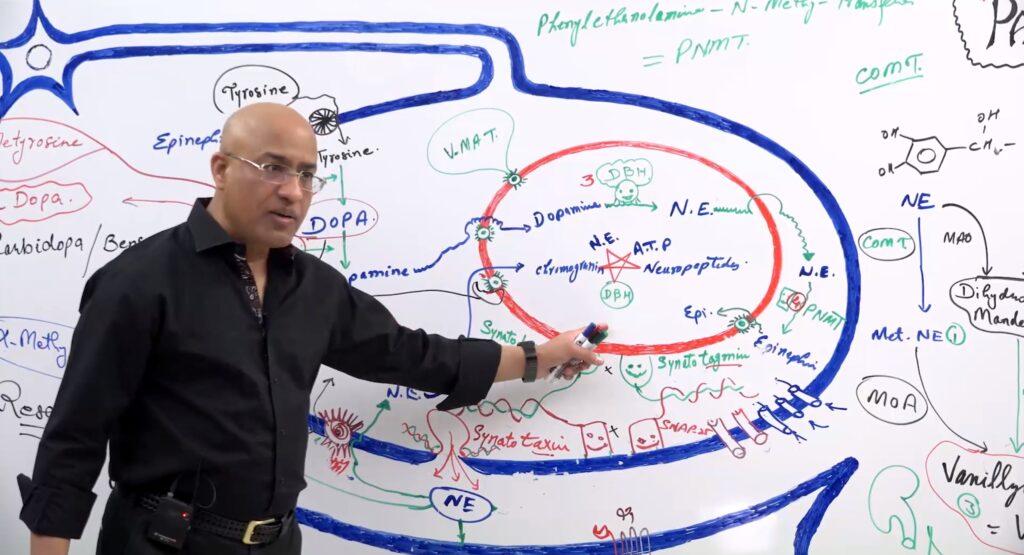
Microbiology asks you to hold two ideas at once: how an organism is built and how that structure decides what it does to the patient and what kills it. Dr. Najeeb teaches the two together. In 31 hand-drawn lectures, you move from the bacterial cell wall to toxins, anaerobes and the antibiotics that exploit each target, then follow the HIV life cycle step by step. The course is taught by a teacher with over 40 years of experience.
| At a glance | Microbiology |
|---|---|
| Taught by | Dr. Najeeb, over 40 years of teaching experience |
| Lectures | 31 video lecture parts in 5 modules |
| Format | Live whiteboard drawing, one idea at a time |
| Starting point | No background needed; the lectures begin with an introduction to microbiology |
| Membership | Lifetime access with the premium plan, future lectures included |
| Study notes | Handwritten notes for every lecture, sold separately (Notes add-on or Combo Plan) |
| Try before you buy | Sample lectures through a free “Try Us Free” account |
| Best for | Medical, dental, nursing, pharmacy and laboratory students; USMLE Step 1, PLAB, COMLEX and NEET PG candidates |
Why Microbiology feels easier here
Microbiology feels like an endless list of organisms until you see the logic that connects structure, toxin and drug. These lectures supply that logic.
- The bacterial cell wall is drawn in detail, so Gram staining and antibiotic action make sense together.
- Toxins are separated by mechanism, which makes botulinum and tetanus easy to compare.
- Anaerobes are taught with memory aids and clinical clues, so recognition becomes quick.
- The HIV life cycle is drawn stage by stage, with the drug that blocks each stage.
- Handwritten notes for every lecture give you a clear revision set.
What you will be able to do after this course
- Describe bacterial structure and the Gram-positive and Gram-negative cell walls
- Distinguish endotoxins from exotoxins
- Explain how botulinum and tetanus toxins cause paralysis
- Classify bacteria by oxygen requirement and recognize anaerobes
- Explain the mechanisms of aminoglycosides, clindamycin, macrolides and metronidazole
- Describe HIV structure and replication
- Match antiretroviral drugs to the stage of the life cycle they block
Where microbiology meets the clinic
- Anaerobic infections
- Botulism and tetanus
- Septic shock and endotoxin
- HIV infection and its treatment
- Antibiotic selection and resistance
- Laboratory diagnosis by antigen-antibody reactions
Lecture roadmap: 31 parts in 5 modules
| Module | Topics (number of lecture parts) | Parts |
|---|---|---|
| 1. Foundations | Introduction to Microbiology (2); Bacterial Cell Wall (3); Antigen-Antibody Reactions in the Laboratory (1) | 6 |
| 2. Toxins and the host response | Endotoxins and Exotoxins (1); Botulinum and Tetanus Toxins (1); Neutrophils in Acute Inflammation (1) | 3 |
| 3. Anaerobes and anaerobic infections | Obligate Anaerobes, Aerotolerant Anaerobes, Facultative Anaerobes, Microaerophiles and Obligate Aerobes (4); How to Remember Anaerobic Bacteria (2); Clinical Clues to Anaerobic Infections (1) | 7 |
| 4. Antibacterial mechanisms | Prokaryotic Protein Synthesis (1); Aminoglycosides (2); Clindamycin (2); Clindamycin vs Metronidazole (2); Clindamycin vs Macrolides vs Chloramphenicol (1) | 8 |
| 5. HIV | HIV Structure, Replication Cycle and Antiretroviral Drugs (7) | 7 |
Total: 31 lecture parts.
Is this course for you?
- Medical students facing microbiology for the first time
- Pharmacy, nursing and laboratory students who need clear mechanisms
- Anyone revising anaerobes, toxins and antibiotics before an exam
- Candidates preparing for USMLE Step 1, PLAB, COMLEX or NEET PG
If antibiotics have always felt like a list to memorize, the antibacterial mechanisms module connects them to the structures they attack.
How to get the most from it
- Learn the bacterial cell wall first, since many later topics refer to it.
- Study toxins and anaerobes with the clinical clues in mind.
- Match each antibiotic to its ribosomal or cell wall target.
- Draw the HIV life cycle from memory and mark each drug target, then revise from the handwritten notes.
Study Microbiology alongside Pharmacology for antibiotics and antiviral drugs in depth, Immunology for how the host fights infection, Molecular Biology, Genetics and Biochemistry for bacterial protein synthesis and DNA replication and General Pathology for inflammation and tissue response.
Microbiology: quick answers
How do Gram-positive and Gram-negative cell walls differ?
Gram-positive bacteria have a thick peptidoglycan layer with teichoic acids. Gram-negative bacteria have a thin peptidoglycan layer surrounded by an outer membrane containing lipopolysaccharide.
What is the difference between endotoxin and exotoxin?
Endotoxin is the lipid A component of lipopolysaccharide in Gram-negative bacteria and causes fever and shock. Exotoxins are secreted proteins with specific effects, such as those of botulinum and tetanus toxins.
How do botulinum and tetanus toxins differ?
Botulinum toxin blocks acetylcholine release at the neuromuscular junction and causes flaccid paralysis. Tetanus toxin blocks release of inhibitory neurotransmitters in the spinal cord and causes spastic paralysis.
Why are anaerobes not killed by aminoglycosides?
Aminoglycoside uptake into bacteria depends on oxygen-dependent transport, so obligate anaerobes do not take the drug up and are resistant.
Which antibiotics act on the 30S and 50S ribosomal subunits?
Aminoglycosides and tetracyclines act on the 30S subunit. Macrolides, clindamycin, chloramphenicol and linezolid act on the 50S subunit.
How does HIV replicate?
HIV attaches to CD4 receptors and a co-receptor, fuses with the cell and releases its RNA. Reverse transcriptase makes DNA, integrase inserts it into the host genome, and new viral proteins are assembled, budded and matured.
What organisms are obligate anaerobes?
Common examples include Bacteroides, Clostridium and Actinomyces species. They lack the enzymes needed to detoxify oxygen products and cannot grow in air.
Frequently asked questions
Do I need prior knowledge before starting microbiology?
No. The course begins with an introduction to microbiology and builds one idea at a time, so a beginner can follow it. If you already know the basics, it works well as a rapid revision of toxins, anaerobes and antibiotics.
How many lectures are in the microbiology course?
The course contains 31 lecture parts organized into 5 modules.
Which topics does the microbiology course cover?
It covers bacterial structure, toxins, oxygen requirements and anaerobic bacteria, antibiotic mechanisms, HIV structure and replication, antiretroviral drugs and laboratory antigen-antibody reactions.
Can I try some lectures before I buy?
Yes. Create a free Try Us Free account to watch sample lectures and see how Dr. Najeeb teaches before you choose a plan.
Do the lectures come with notes?
Yes. Handwritten notes are available for every lecture in this course. They are sold separately through the Notes add-on or the Combo Plan.
How long do I keep access to the lectures?
The premium plan gives you lifetime access, including any new lectures added to the library later.
Can I watch the lectures offline?
Offline viewing works only inside the official Dr. Najeeb Lectures app. The videos cannot be downloaded as separate files.
Will this course help with USMLE, PLAB, COMLEX or NEET PG?
It covers the microbiology content that these exams test. It does not include a question bank or a certificate.
Can I get a refund?
Dr. Najeeb Lectures offers a 7-day refund. Email support@drnajeeblectures.com to request one.