Molecular Biology, Genetics & Biochemistry
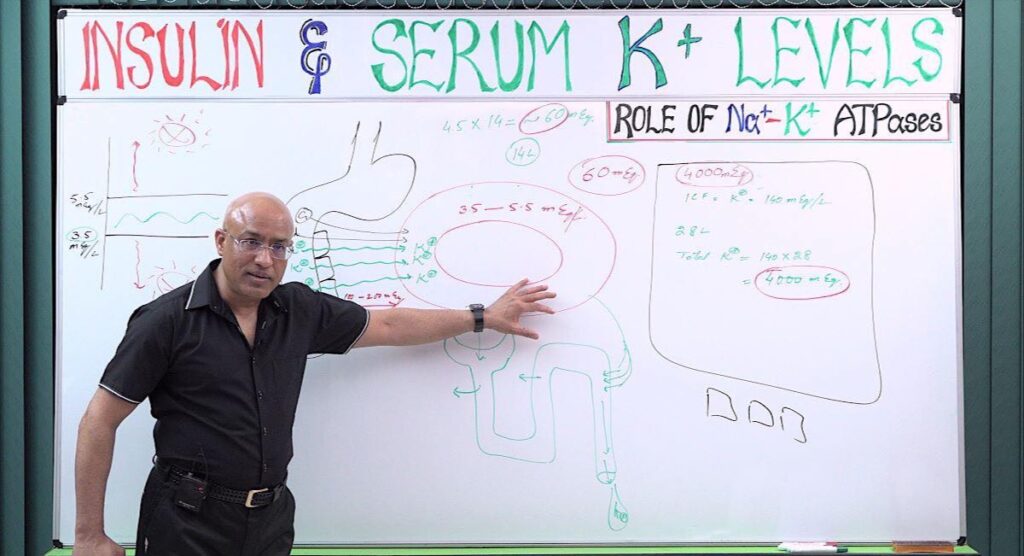
Every disease eventually traces back to a molecule that did not do its job. This course gives you the language to follow that trail. In 124 hand-drawn lectures, Dr. Najeeb moves from the structure of DNA through replication, transcription and inheritance, then into the metabolic pathways that power the cell and the signaling systems that regulate it. Each pathway is drawn step by step, with the clinical reason for learning it in plain view. The course is taught by a teacher with over 40 years of experience.
| At a glance | Molecular Biology, Genetics & Biochemistry |
|---|---|
| Instructor | Dr. Najeeb, over 40 years of teaching experience |
| Course length | 124 video lecture parts in 6 modules |
| Teaching style | Live whiteboard drawing, one idea at a time |
| Prior knowledge | No background needed; the lectures begin with DNA structure |
| Access | Lifetime access with the premium plan, future lectures included |
| Notes | Handwritten notes for every lecture, sold separately (Notes add-on or Combo Plan) |
| Free preview | Sample lectures through a free “Try Us Free” account |
| Ideal for | Medical, dental, nursing, pharmacy and biomedical students; USMLE Step 1, PLAB, COMLEX and NEET PG candidates |
What makes this molecular biology course different
Biochemistry is the subject students most often memorize and most often forget. These lectures teach the pathways as stories with a purpose, which is what makes them stay.
- Metabolic pathways are drawn from start to finish, with the control point and the disease marked.
- Genetics is taught through patterns of inheritance you can work out, not rules to recite.
- Insulin, glucose transport and ketone metabolism are covered in depth because they connect so many topics.
- Hemoglobin, vitamins and acid-base balance link biochemistry to the bedside.
- Handwritten notes for every lecture give you a clear revision set.
Skills and knowledge you will gain
- Describe the structure of DNA and how it is packaged
- Explain DNA replication, transcription and prokaryotic translation
- Classify mutations and predict their consequences
- Work through Mendelian inheritance, linkage and cytogenetic disorders
- Follow glycolysis, the TCA cycle, gluconeogenesis and glycogen metabolism
- Explain the electron transport chain and oxidative phosphorylation
- Describe fatty acid synthesis, mobilization and oxidation
- Explain hemoglobin structure and hemoglobinopathies
- Describe receptor, G protein and insulin signaling
- Explain pH and acid-base balance
Clinical connections along the way
- Sickle cell disease and other hemoglobinopathies
- Glycogen storage diseases
- Chromosomal and single-gene disorders
- Diabetes mellitus and ketoacidosis
- Vitamin deficiencies and toxicities
- Botulinum and tetanus toxin action
- Acid-base disorders
Inside the course: 124 lectures in 6 modules
| Module | Topics (number of lecture parts) | Parts |
|---|---|---|
| 1. DNA and gene expression | DNA Structure (2); DNA Replication (3); DNA Organization (2); DNA Transcription (6); Prokaryotic Protein Synthesis (1) | 14 |
| 2. Genetics and inheritance | Mutations (3); Linkage Analysis (3); Cytogenetic Disorders (4); Mendelian Inheritance (5); Cell Cycle and Genes (2) | 17 |
| 3. Energy metabolism | Electron Transport Chain and Oxidative Phosphorylation (4); Glycolysis (6); Krebs Cycle (5); Gluconeogenesis (2); Glycogen Metabolism (4); Glycogen Storage Diseases (2) | 23 |
| 4. Lipids, vitamins and proteins | Fatty Acid and TAG Synthesis (1); Mobilization and Oxidation of Fatty Acids (2); Fat Soluble Vitamins (2); Globular Proteins: Hemoglobin and Hemoglobinopathies (6) | 11 |
| 5. Insulin, glucose and ketone metabolism | Insulin Synthesis, Receptors and Signaling (9); Insulin Effects on Carbohydrate, Fat and Potassium (7); Hexokinase vs Glucokinase (2); LPL vs HSL (2); Lipolysis, Ketone Bodies, Transport and DKA (8); Intro to Diabetes, Normal Glucose and Fed State (6); Glucagon (1); GLUTs (8); Na+ K+ Pump (1) | 44 |
| 6. Receptors, toxins and acid-base | Receptors and Intracellular Signaling (5); Catecholamines (4); Receptor-Agonist Concepts (1); Receptors and Drugs (1); G Protein-Coupled Receptor (1); Botulinum and Tetanus Toxins (1); pH and Acid-Base Balance (2) | 15 |
Total: 124 lecture parts.
Who benefits most
- First-year medical students facing biochemistry and genetics
- Pharmacy, dental and biomedical students who need a strong molecular base
- Anyone revising metabolic pathways before an exam
- Candidates preparing for USMLE Step 1, PLAB, COMLEX or NEET PG
If you have ever drawn a pathway from memory and lost it a week later, the way these lectures build each step is designed to fix that.
A smart way to study molecular biology
- Start with DNA and gene expression, then move to genetics before metabolism.
- Redraw each pathway from memory and mark the regulated enzyme.
- Study insulin and glucose together, since they link metabolism to diabetes.
- Revise each module from the handwritten notes the same day.
Related courses in the Video Library: Endocrine Physiology for hormones and signaling, Diabetes Mellitus for insulin and glucose metabolism, Pharmacology for drugs that act on these pathways, General Pathology for cancer genes and cell injury and Microbiology for bacterial protein synthesis and toxins.
Fast answers on molecular biology
What is the central dogma of molecular biology?
Genetic information flows from DNA to RNA to protein. DNA is replicated, transcribed into RNA and translated into protein.
How is DNA replicated?
Helicase unwinds the double helix, primase lays down an RNA primer, and DNA polymerase extends the new strand. The leading strand is made continuously, the lagging strand in Okazaki fragments, and ligase seals the gaps.
What types of mutation exist?
Point mutations include silent, missense and nonsense changes, and insertions or deletions that are not multiples of three cause frameshifts. Sickle cell disease is a missense mutation that replaces glutamic acid with valine in the beta globin chain.
How many ATP molecules does glycolysis produce?
Glycolysis converts one glucose to two pyruvate with a net gain of two ATP and two NADH. Phosphofructokinase-1 is its main regulatory enzyme.
What happens in the TCA cycle?
The TCA cycle takes place in the mitochondrial matrix. For each acetyl-CoA it releases two carbon dioxide molecules and generates three NADH, one FADH2 and one GTP.
How does the electron transport chain make ATP?
Electrons pass through complexes I to IV and pump protons across the inner mitochondrial membrane. The resulting gradient drives ATP synthase, which produces ATP from ADP.
What are the main patterns of Mendelian inheritance?
They are autosomal dominant, autosomal recessive, X-linked recessive and X-linked dominant. Each produces a characteristic pattern in a pedigree.
What is the structure of normal adult hemoglobin?
Hemoglobin A is a tetramer of two alpha and two beta globin chains, each with a heme group. Hemoglobinopathies and thalassemias arise from abnormal or reduced globin chains.
Everything students ask before they start
Do I need prior knowledge before starting molecular biology?
No. The course begins with DNA structure and builds one idea at a time, so a beginner can follow it. If you already know the basics, it works well as a rapid revision of metabolism and genetics.
How long is the molecular biology course?
The course contains 124 lecture parts organized into 6 modules.
Which topics does the molecular biology course cover?
It covers DNA structure, replication and transcription, mutations, inheritance, cytogenetics, glycolysis, the TCA cycle, gluconeogenesis, glycogen metabolism, the electron transport chain, lipid metabolism, vitamins, hemoglobin, receptors and insulin biochemistry.
Can I try some lectures before I buy?
Yes. A free Try Us Free account lets you watch sample lectures first, so you can judge the teaching style before you subscribe.
Do the lectures come with notes?
Yes. Handwritten notes are available for every lecture in this course. They are sold separately through the Notes add-on or the Combo Plan.
How long do I keep access to the lectures?
Access lasts for life on the premium plan, and it includes lectures that are added in the future.
Can I watch the lectures offline?
You can watch offline only through the official Dr. Najeeb Lectures app. Separate video files are not available for download.
Will this course help with USMLE, PLAB, COMLEX or NEET PG?
It covers the molecular biology content that these exams test. It does not include a question bank or a certificate.
Can I get a refund?
A 7-day refund is available. To request it, email support@drnajeeblectures.com.