Pharmacology
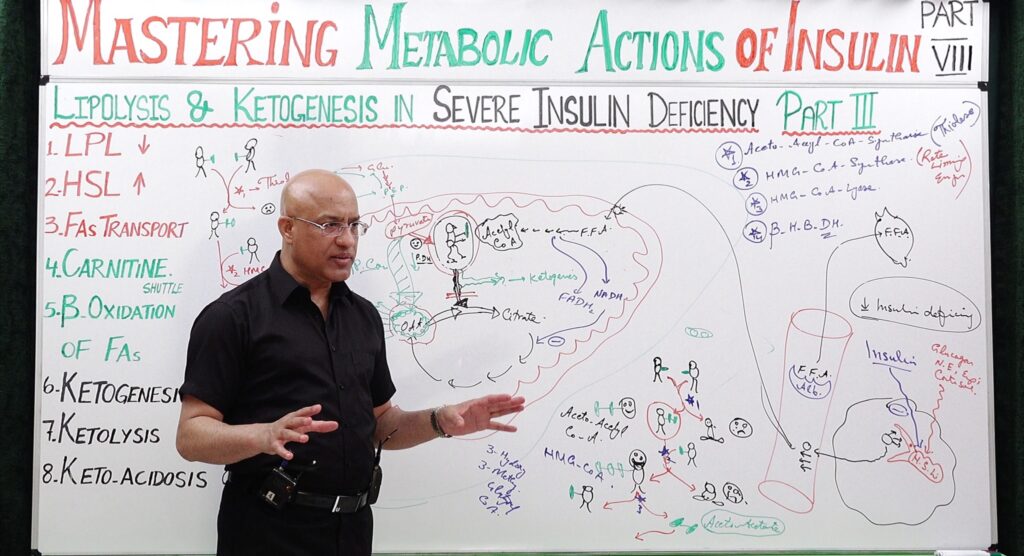
A drug is a molecular key, and pharmacology is the study of the locks it fits. Dr. Najeeb teaches pharmacology by starting with the physiology of the lock, so that the action, the effect and the side effect of every drug follow logically. In 138 hand-drawn lectures, you work through the autonomic nervous system, psychiatric and neurological drugs, cardiovascular therapy, antibiotics and antiretrovirals, and the pharmacology of insulin. The course is taught by a teacher with over 40 years of experience.
| At a glance | Pharmacology |
|---|---|
| Teacher | Dr. Najeeb, over 40 years of teaching experience |
| Number of lectures | 138 video lecture parts in 5 modules |
| How it is taught | Live whiteboard drawing, one idea at a time |
| Where to begin | No background needed; the lectures begin with the physiology behind the drugs |
| Plan | Lifetime access with the premium plan, future lectures included |
| Handwritten notes | Handwritten notes for every lecture, sold separately (Notes add-on or Combo Plan) |
| Sample lectures | Sample lectures through a free “Try Us Free” account |
| Suited to | Medical, dental, nursing, pharmacy and physiotherapy students; USMLE Step 1, PLAB, COMLEX and NEET PG candidates |
Learn pharmacology by understanding, not memorizing
Memorizing drug lists is the slowest way to learn pharmacology. These lectures teach the receptor, the pathway and the clinical reason, so each drug has a home.
- Autonomic pharmacology is built from the physiology of the nervous system, so the effects of agonists and antagonists can be predicted.
- Antibiotics are grouped by mechanism and spectrum, with clinical clues for choosing between them.
- Cardiovascular drugs are linked to the physiology of blood pressure, rhythm and failure.
- Receptors and signaling are explained once and reused, which cuts the amount you need to memorize.
- Handwritten notes for every lecture give you a clear revision set.
By the end you will understand
- Explain how autonomic drugs act on adrenergic and cholinergic receptors
- Predict the effects of adrenergic agonists, cholinergic drugs and anticholinergics
- Describe the drugs used in psychiatric disorders, Parkinson disease and Alzheimer disease
- Explain the mechanism of antihypertensive, antiarrhythmic, antianginal and heart failure drugs
- Describe diuretic classes and where they act
- Explain the mechanisms, spectra and adverse effects of major antibiotics
- Describe the stages of HIV replication and the drugs that target them
- Explain the pharmacology of insulin and its effects
Real-world and exam relevance
- Hypertension and heart failure therapy
- Arrhythmia management
- Antibiotic selection and resistance
- Anaerobic infections
- HIV treatment
- Parkinson disease and Alzheimer disease
- Psychiatric drug adverse effects
- Insulin therapy and potassium handling
Course map: 138 lecture parts, module by module
| Module | Topics (number of lecture parts) | Parts |
|---|---|---|
| 1. Autonomic pharmacology | Catecholamines (4); A.N.S., Epinephrine and Norepinephrine (7); Receptors and Intracellular Signaling (5); Adrenergic Agonists (10); Cholinergic System (5); Cholinergic Drugs (3); Anti-Cholinergic Drugs (2) | 36 |
| 2. Neuropsychiatric drugs | Psychiatric Terms for Psychopharmacology (3); Anti-Psychotic Drugs (4); Drugs for Parkinson and Alzheimer Disease (6) | 13 |
| 3. Cardiovascular drugs | Diuretics (3); Anti-Hypertensive Drugs (5); Anti-Arrhythmic Drugs (6); Anti-Anginal Drugs (5); Drugs for Cardiac Failure (7); Na+ K+ Pump (1) | 27 |
| 4. Antimicrobial pharmacology | Penicillins (4); Fluoroquinolones (2); Aminoglycosides (4); Clindamycin, Macrolides and Chloramphenicol (5); Metronidazole (1); Anaerobic Bacteria and Clues (5); Prokaryotic Protein Synthesis (1); HIV and Antiretroviral Drugs (7) | 29 |
| 5. Insulin and glucose pharmacology | Insulin Synthesis, Receptors and Signaling (9); Insulin Effects on Carbohydrate and Fat (5); Hexokinase vs Glucokinase (2); LPL vs HSL (2); Lipolysis and Ketogenesis (3); Ketone Transport (2); Insulin and Potassium (2); GLUTs (8) | 33 |
Total: 138 lecture parts.
Built for these learners
- Medical students facing pharmacology for the first time
- Pharmacy and nursing students who need clear mechanisms
- Anyone revising drug classes before an exam
- Candidates preparing for USMLE Step 1, PLAB, COMLEX or NEET PG
If you have been memorizing drug names without understanding them, the autonomic module is the best place to start.
Study tips built into the course design
- Complete the autonomic module first, since it supports almost every later class.
- Make a one-line mechanism card for each drug group as you go.
- Link every cardiovascular drug to the physiology it changes.
- Revise each module from the handwritten notes the same day.
Study Pharmacology alongside Neuro Anatomy and Neuro Physiology for the nervous system these drugs act on, Cardiac Physiology for cardiac output and arrhythmias, Renal Physiology for where diuretics act, Microbiology for the organisms antibiotics target and Endocrine Physiology for insulin and hormonal pathways.
Pharmacology in brief
How do penicillins work?
Penicillins inhibit the transpeptidase enzymes, also called penicillin-binding proteins, that cross-link bacterial cell wall peptidoglycan. The weakened wall leads to cell lysis, so penicillins are bactericidal.
How do aminoglycosides work and what are their main toxicities?
Aminoglycosides bind the 30S ribosomal subunit and are bactericidal. Their uptake requires oxygen, so they are ineffective against anaerobes. Their main toxicities are nephrotoxicity and ototoxicity.
What is the mechanism of metronidazole?
Metronidazole is a prodrug that is reduced in anaerobic organisms to reactive intermediates that damage DNA. It is therefore active against anaerobic bacteria and some protozoa.
How do fluoroquinolones work?
Fluoroquinolones inhibit bacterial DNA gyrase and topoisomerase IV, which blocks DNA replication and is bactericidal.
What do the adrenergic receptors do?
Alpha-1 receptors cause vasoconstriction, beta-1 receptors increase heart rate and contractility, and beta-2 receptors cause bronchodilation and vasodilation in skeletal muscle. Alpha-2 receptors inhibit further norepinephrine release.
What is the difference between muscarinic and nicotinic receptors?
Muscarinic receptors are G protein-coupled receptors found at parasympathetic target organs. Nicotinic receptors are ligand-gated ion channels found at autonomic ganglia and the neuromuscular junction.
Which drug classes treat hypertension?
The main classes are ACE inhibitors, angiotensin receptor blockers, calcium channel blockers, thiazide diuretics and beta blockers. The choice depends on the patient and the comorbid conditions.
How do nitrates relieve angina?
Nitrates release nitric oxide, which dilates veins and reduces preload. This lowers myocardial oxygen demand and relieves anginal pain.
Your questions, answered
Do I need prior knowledge before starting pharmacology?
No. The lectures start with the physiology behind each drug group, so a beginner can follow them. If you already know the basics, they work well as a rapid revision of drug mechanisms.
How many pharmacology lectures can I watch?
The course contains 138 lecture parts organized into 5 modules.
Which topics does the pharmacology course cover?
It covers autonomic pharmacology, cholinergic and adrenergic drugs, psychiatric drugs, Parkinson and Alzheimer drugs, diuretics, antihypertensive, antiarrhythmic, antianginal and heart failure drugs, antibiotics, HIV therapy and the pharmacology of insulin.
Can I try some lectures before I buy?
Yes. Sign up for a free Try Us Free account, watch the sample lectures, then decide whether to upgrade.
Do the lectures come with notes?
Yes. Handwritten notes are available for every lecture in this course. They are sold separately through the Notes add-on or the Combo Plan.
How long do I keep access to the lectures?
With the premium plan you keep access permanently, and new lectures are included at no extra cost.
Can I watch the lectures offline?
Offline access is limited to the official Dr. Najeeb Lectures app, and the videos cannot be saved as standalone files.
Will this course help with USMLE, PLAB, COMLEX or NEET PG?
Yes, it covers the drug mechanisms, classes and adverse effects these exams test. It does not include a question bank or a certificate.
Can I get a refund?
Refunds are available within 7 days. Email support@drnajeeblectures.com and the team will help.