
GI & Hepatobiliary Physiology
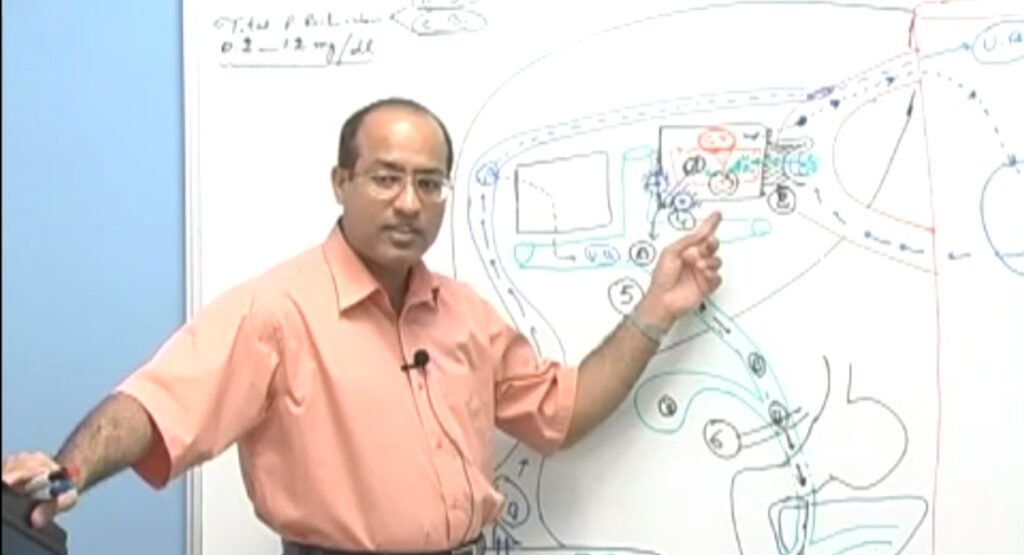
The gut is a muscular tube with a mind of its own, and the liver processes everything it absorbs. This focused course takes two of the most examined topics in gastrointestinal physiology and teaches them in depth. Five lectures on motility explain how food is moved, mixed and propelled, and four lectures on jaundice follow bilirubin from hemoglobin breakdown to its excretion. The nine lectures are taught by a teacher with over 40 years of experience.
| At a glance | GI & Hepatobiliary Physiology |
|---|---|
| Teacher | Dr. Najeeb, over 40 years of teaching experience |
| Number of lectures | 9 video lecture parts in two modules |
| How it is taught | Live whiteboard drawing, one idea at a time |
| Where to begin | No background needed; the lectures begin with the basics of gut motility |
| Plan | Lifetime access with the premium plan, future lectures included |
| Handwritten notes | Handwritten notes for every lecture, sold separately (Notes add-on or Combo Plan) |
| Sample lectures | Sample lectures through a free “Try Us Free” account |
| Suited to | Medical, dental, nursing and pharmacy students; USMLE Step 1, PLAB, COMLEX and NEET PG candidates |
A clearer way into GI physiology
A small course can be the most valuable one if it targets the topics that carry the most marks. Motility and jaundice are two of them.
- Motility is explained through the electrical and neural control of the gut, so each pattern has a reason.
- Jaundice is taught through bilirubin metabolism, which makes the three types easy to tell apart.
- Short, focused lectures make this course ideal for quick revision.
- Handwritten notes for every lecture give you a clear study set.
Topics at the heart of the course
- Describe how smooth muscle, the enteric nervous system and hormones control gut motility
- Explain peristalsis and other movement patterns of the gastrointestinal tract
- Follow bilirubin from heme breakdown to excretion
- Classify jaundice into pre-hepatic, hepatic and post-hepatic causes
- Interpret the pattern of conjugated and unconjugated bilirubin in each type
From lecture hall to ward
- Disorders of gut motility
- Hemolytic jaundice
- Hepatocellular jaundice
- Obstructive jaundice
- Neonatal jaundice
- Interpreting urine and stool color in jaundice
Step-by-step outline (9 parts)
| Module | Topics (number of lecture parts) | Parts |
|---|---|---|
| 1. Gastrointestinal motility | G.I. Motility (5) | 5 |
| 2. Jaundice | Jaundice (4) | 4 |
Total: 9 lecture parts.
Who this course serves best
- Medical students revising gastrointestinal physiology
- Nursing and pharmacy students who need clear explanations of jaundice
- Anyone who wants a short, focused review before an exam
- Candidates preparing for USMLE Step 1, PLAB, COMLEX or NEET PG
Because the course is short, you can finish it in a few sittings and revisit it before exams.
A study plan that works
- Watch the motility lectures first, then move to jaundice.
- Draw the bilirubin pathway from memory after each jaundice lecture.
- Match each type of jaundice to its lab pattern.
- Use the handwritten notes for quick revision.
These courses connect naturally with GI & Hepatobiliary Physiology: Histology for the liver, gut and pancreas under the microscope, Molecular Biology, Genetics and Biochemistry for metabolism and heme breakdown, Blood Physiology for red cell destruction and hemolysis, Hematopoietic and Lymphoid Pathology for hemolytic anemias and Endocrine Physiology for the pancreas and metabolic hormones.
Key GI physiology concepts in a minute
What controls gut motility?
Motility is controlled by the interstitial cells of Cajal, which generate slow waves, by the enteric nervous system and by autonomic input and gastrointestinal hormones.
What is peristalsis?
Peristalsis is a wave of contraction behind a bolus with relaxation ahead of it, which propels contents along the gut. It is coordinated by the myenteric plexus.
What is the difference between conjugated and unconjugated bilirubin?
Unconjugated bilirubin is produced from heme breakdown, travels bound to albumin and is not water soluble. The liver conjugates it with glucuronic acid, which makes it water soluble and allows excretion in bile.
How is jaundice classified?
Jaundice may be pre-hepatic (excess bilirubin production, as in hemolysis), hepatic (impaired uptake, conjugation or excretion in the liver) or post-hepatic (obstruction of bile flow).
Why are the urine dark and the stools pale in obstructive jaundice?
When bile flow is blocked, conjugated bilirubin regurgitates into the blood and is excreted in urine, making it dark, while less bilirubin reaches the gut so stools lose their color.
When does jaundice become visible?
Jaundice usually becomes clinically visible when the serum bilirubin rises above about 2.5 to 3 mg per dL.
Questions students ask most
Do I need prior knowledge before starting GI physiology?
No. The course starts with the basics of gut motility and bilirubin, so a beginner can follow it. If you already know the material, it works as a quick revision.
How many GI physiology lectures can I watch?
The course contains 9 lecture parts: 5 on gastrointestinal motility and 4 on jaundice.
Which topics does the GI physiology course cover?
It covers gastrointestinal motility and jaundice, including bilirubin metabolism and the classification of jaundice.
Can I try some lectures before I buy?
Yes. Sign up for a free Try Us Free account, watch the sample lectures, then decide whether to upgrade.
Do the lectures come with notes?
Yes. Handwritten notes are available for every lecture in this course. They are sold separately through the Notes add-on or the Combo Plan.
How long do I keep access to the lectures?
With the premium plan you keep access permanently, and new lectures are included at no extra cost.
Can I watch the lectures offline?
Offline access is limited to the official Dr. Najeeb Lectures app, and the videos cannot be saved as standalone files.
Will this course help with USMLE, PLAB, COMLEX or NEET PG?
It covers the GI physiology content that these exams test. It does not include a question bank or a certificate.
Can I get a refund?
Refunds are available within 7 days. Email support@drnajeeblectures.com and the team will help.