
Hematopoietic & Lymphoid Pathology
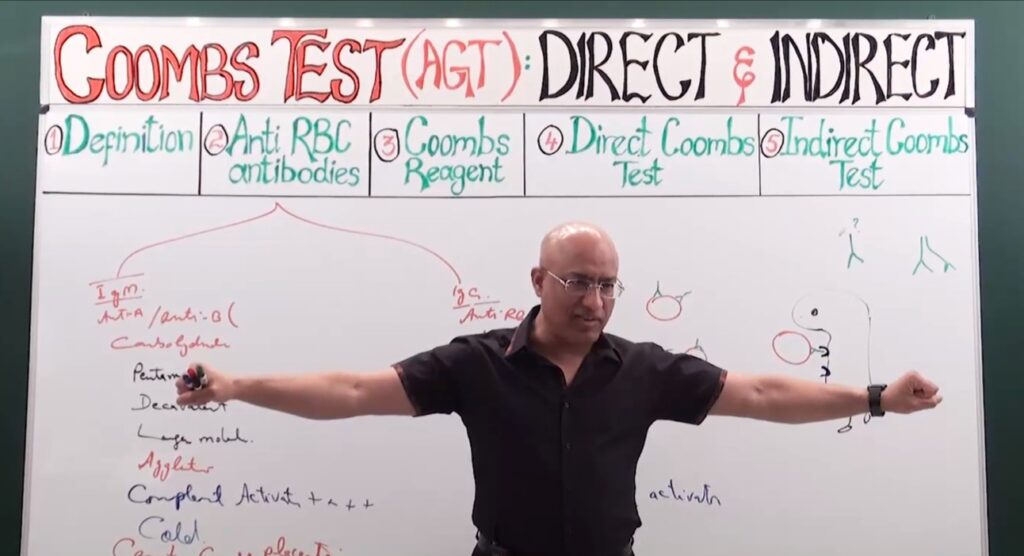
Hematology rewards the student who learns patterns. A single blood film can separate iron deficiency from vitamin B12 deficiency, hemolysis from marrow failure and leukemia from reactive change, if you know what each disease does to the cell. Dr. Najeeb’s Hematopoietic and Lymphoid Pathology course teaches those patterns across 52 hand-drawn lectures, from anemias and hemolysis to blood groups, leukemias, lymphomas and plasma cell disease. The course is taught by a teacher with over 40 years of experience.
| At a glance | Hematopoietic & Lymphoid Pathology |
|---|---|
| Instructor | Dr. Najeeb, over 40 years of teaching experience |
| Course length | 52 video lecture parts in 5 modules |
| Teaching style | Live whiteboard drawing, one idea at a time |
| Prior knowledge | No background needed; the lectures begin with red cell indices and anemia |
| Access | Lifetime access with the premium plan, future lectures included |
| Notes | Handwritten notes for every lecture, sold separately (Notes add-on or Combo Plan) |
| Free preview | Sample lectures through a free “Try Us Free” account |
| Ideal for | Medical, dental, nursing and laboratory students; USMLE Step 1, PLAB, COMLEX and NEET PG candidates |
Why students choose this hematopoietic and lymphoid pathology course
Blood diseases are far easier to learn as a set of patterns than as a list of names. These lectures build the patterns one at a time.
- Anemias are organized by mechanism, so classification follows from the cause.
- Hemolytic anemias are separated into intrinsic and extrinsic causes with a clear framework.
- Leukemias and lymphomas are taught with their cell of origin, which makes the classification logical.
- Blood groups and transfusion reactions are covered alongside the immunology behind them.
- Handwritten notes for every lecture give you a clear revision set.
What you will master
- Use red cell indices to classify anemias
- Explain megaloblastic anemia, iron deficiency anemia and aplastic anemia
- Distinguish intrinsic from extrinsic hemolytic anemias
- Describe spherocytosis, G6PD deficiency and paroxysmal nocturnal hemoglobinuria
- Explain the ABO and Rh systems and the Coombs test
- Describe acute lymphoblastic leukemia and chronic lymphocytic leukemia
- Distinguish Hodgkin from non-Hodgkin lymphoma
- Describe plasma cell dyscrasias
Clinical relevance at a glance
- Anemia work-up
- Hemolytic crises
- Transfusion reactions
- Hemolytic disease of the newborn
- Childhood and adult leukemia
- Lymphoma
- Multiple myeloma
Curriculum overview: 5 modules, 52 parts
| Module | Topics (number of lecture parts) | Parts |
|---|---|---|
| 1. Anemia and marrow failure | RBC Indices (2); Aplastic Anemia, Bone Marrow Failure and Pancytopenia (2); Megaloblastic Anemia (6); Iron Metabolism and Iron Deficiency Anemia (3) | 13 |
| 2. Hemolytic anemias | Basic Concepts (4); Extrinsic Hemolytic Anemia (1); Spherocytosis (2); G6PD Deficiency (2); Paroxysmal Nocturnal Hemoglobinuria (2) | 11 |
| 3. Blood groups, transfusion and neutrophils | ABO Blood Group System (3); Anti-RBC Antibodies and Coombs Test (3); Rh Blood Group System (3); Neutrophils in Acute Inflammation (1) | 10 |
| 4. Leukemias | Leukemia, An Introduction (3); Acute Lymphoblastic Leukemia and Lymphoma (5); Chronic Lymphocytic Leukemia (4) | 12 |
| 5. Lymphomas and plasma cell disease | Hodgkin and Non-Hodgkin Lymphomas (5); Plasma Cell Dyscrasias (1) | 6 |
Total: 52 lecture parts.
Who should enrol
- Medical students meeting hematopathology for the first time
- Laboratory and nursing students who need a clear view of blood disease
- Anyone revising anemias and leukemias before an exam
- Candidates preparing for USMLE Step 1, PLAB, COMLEX or NEET PG
If the many types of anemia have ever blurred together, the mechanism-based modules sort them out.
Making the most of each lecture
- Start with red cell indices and the classification of anemia.
- Study each hemolytic anemia with its blood film and trigger.
- Learn leukemias by the cell of origin before the details.
- Revise each module from the handwritten notes the same day.
Study Hematopoietic & Lymphoid Pathology alongside Blood Physiology for the normal cells and clotting, Immunology for antibody-mediated disease and transfusion, General Pathology for neoplasia and cancer genes, Histology for marrow, blood cells and lymphoid organs and Molecular Biology, Genetics and Biochemistry for hemoglobin and inherited disease.
Hematopoietic & Lymphoid Pathology questions, answered fast
What causes megaloblastic anemia?
Vitamin B12 or folate deficiency impairs DNA synthesis, producing large immature red cells and hypersegmented neutrophils. B12 deficiency can also damage the nervous system.
How is iron deficiency anemia recognized?
It causes a microcytic, hypochromic anemia with low serum ferritin and iron and a raised total iron-binding capacity.
What is the difference between intravascular and extravascular hemolysis?
Intravascular hemolysis destroys red cells within the circulation and releases hemoglobin into plasma. Extravascular hemolysis removes red cells in the spleen and liver by macrophages.
What is spherocytosis?
Hereditary spherocytosis is caused by defects in red cell membrane proteins such as ankyrin and spectrin. The cells become spherical, fragile and are removed by the spleen.
What is G6PD deficiency?
G6PD deficiency is an X-linked disorder in which red cells are vulnerable to oxidative stress. Triggers such as infections, fava beans and some drugs cause hemolysis, with Heinz bodies and bite cells on the blood film.
What is paroxysmal nocturnal hemoglobinuria?
It is an acquired disorder caused by a PIGA mutation in a stem cell. Loss of complement-regulating proteins CD55 and CD59 makes red cells vulnerable to complement-mediated hemolysis.
How do Hodgkin and non-Hodgkin lymphoma differ?
Hodgkin lymphoma is characterized by Reed-Sternberg cells and usually spreads in a contiguous pattern. Non-Hodgkin lymphomas are a diverse group that often involve multiple nodal sites.
What is multiple myeloma?
Multiple myeloma is a malignancy of plasma cells that produces a monoclonal protein. It is associated with hypercalcemia, renal impairment, anemia and bone lesions.
Course FAQs
Do I need prior knowledge before starting hematopoietic and lymphoid pathology?
No. The course begins with red cell indices and builds one idea at a time, so a beginner can follow it. If you already know the basics, it works well as a rapid revision of anemias and leukemias.
How long is the hematopoietic and lymphoid pathology course?
The course contains 52 lecture parts organized into 5 modules.
Which topics does the hematopoietic and lymphoid pathology course cover?
It covers red cell indices, anemias, hemolytic anemias, the ABO and Rh blood groups, the Coombs test, leukemias, lymphomas and plasma cell dyscrasias.
Can I try some lectures before I buy?
Yes. A free Try Us Free account lets you watch sample lectures first, so you can judge the teaching style before you subscribe.
Do the lectures come with notes?
Yes. Handwritten notes are available for every lecture in this course. They are sold separately through the Notes add-on or the Combo Plan.
How long do I keep access to the lectures?
Access lasts for life on the premium plan, and it includes lectures that are added in the future.
Can I watch the lectures offline?
You can watch offline only through the official Dr. Najeeb Lectures app. Separate video files are not available for download.
Will this course help with USMLE, PLAB, COMLEX or NEET PG?
It covers the hematopoietic and lymphoid pathology content that these exams test. It does not include a question bank or a certificate.
Can I get a refund?
A 7-day refund is available. To request it, email support@drnajeeblectures.com.