
Blood Physiology
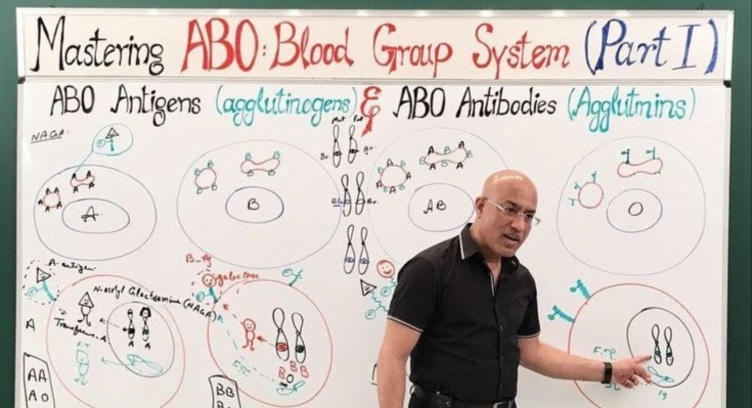
Blood is a tissue, an organ system and a diagnostic window all at once. A single complete blood count can point toward infection, anemia, bleeding or leukemia, but only if you know where each cell comes from and what it does. Dr. Najeeb’s Blood Physiology course follows the cells from stem cell to circulation in 23 hand-drawn lectures, then shows how clotting and blood groups protect and sometimes endanger the patient. It is taught by a teacher with over 40 years of experience.
| At a glance | Blood Physiology |
|---|---|
| Instructor | Dr. Najeeb, over 40 years of teaching experience |
| Course length | 23 video lecture parts in 4 modules |
| Teaching style | Live whiteboard drawing, one idea at a time |
| Prior knowledge | No background needed; the lectures begin with the bone marrow |
| Access | Lifetime access with the premium plan, future lectures included |
| Notes | Handwritten notes for every lecture, sold separately (Notes add-on or Combo Plan) |
| Free preview | Sample lectures through a free “Try Us Free” account |
| Ideal for | Medical, dental, nursing, pharmacy and laboratory students; USMLE Step 1, PLAB, COMLEX and NEET PG candidates |
What makes this blood physiology course different
Hematology becomes much simpler when every result on a blood report is tied to the cell and the process behind it. These lectures make that link visible.
- Cells are taught in order of development, so each lineage has a clear starting point.
- Red cell indices are explained as measurements, so classifying an anemia becomes logical.
- Coagulation is drawn step by step, so the cascade is something you can reproduce.
- Blood group systems and antibody tests are explained through the reactions that actually occur in the patient.
- Handwritten notes for every lecture give you a compact revision set.
Skills and knowledge you will gain
- Describe how hematopoiesis proceeds from the stem cell to mature blood cells
- Interpret red cell indices such as MCV, MCH and MCHC
- Name the types of white blood cell and state what each one does
- Explain the roles of neutrophils in acute inflammation
- Describe platelet function and the steps of coagulation
- Explain how the thymus shapes T-cell development
- Work out ABO and Rh compatibility for transfusion and pregnancy
- Explain what the direct and indirect Coombs tests detect
Clinical connections along the way
- Anemia classification using red cell indices
- Bleeding and clotting disorders
- Transfusion reactions
- Hemolytic disease of the newborn
- Autoimmune hemolytic anemia and the Coombs test
- Infection and the white cell response
Inside the course: 23 lectures in 4 modules
| Module | Topics (number of lecture parts) | Parts |
|---|---|---|
| 1. Marrow and red blood cells | Bone Marrow and Hematopoiesis (2); Red Blood Cells (2); RBC Indices (2) | 6 |
| 2. White cells and immune development | White Blood Cells (3); Thymus and T-cell Development (2); Neutrophils in Acute Inflammation (1) | 6 |
| 3. Platelets and clotting | Platelets and Coagulation System (2) | 2 |
| 4. Blood groups and antibodies | ABO Blood Group System (3); Anti-RBC Antibodies and Coombs Test (3); Rh Blood Group System (3) | 9 |
Total: 23 lecture parts.
Who benefits most
- First-year medical students beginning hematology
- Pharmacy, nursing and laboratory science students who need clear blood basics
- Students revising before a physiology or pathology examination
- Candidates preparing for USMLE Step 1, PLAB, COMLEX or NEET PG
Start with hematopoiesis, because every other lecture in the course builds on it.
A smart way to study blood physiology
- Draw the hematopoietic lineage chart from memory after the first two lectures.
- Study red cell indices with a sample blood report in front of you.
- Finish ABO, Coombs and Rh lectures in one sitting, since the three explain one another.
- Revise each module from the handwritten notes on the same day.
These courses connect naturally with Blood Physiology: Hematopoietic and Lymphoid Pathology for the diseases of blood cells, Immunology for antibodies and the immune response, Histology for how blood cells look under the microscope, Vascular Physiology for circulation and body fluids and General Pathology for inflammation and its cells.
Fast answers on blood physiology
What is hematopoiesis?
Hematopoiesis is the formation of blood cells from hematopoietic stem cells. After birth it takes place mainly in the red bone marrow of the pelvis, vertebrae, sternum, ribs and skull.
What do red cell indices tell you?
The mean corpuscular volume (MCV) measures cell size, the mean corpuscular hemoglobin (MCH) measures hemoglobin per cell, and the MCHC measures hemoglobin concentration. Together they help classify anemia as microcytic, normocytic or macrocytic.
What are the five types of white blood cell?
The five types are neutrophils, lymphocytes, monocytes, eosinophils and basophils. Neutrophils are the most abundant and are the first cells to arrive at a site of bacterial infection.
How does blood clot?
Clotting starts with a platelet plug (primary hemostasis). The coagulation cascade then builds a fibrin mesh through the intrinsic, extrinsic and common pathways (secondary hemostasis), and fibrinolysis later dissolves the clot.
How does the ABO system work?
Red cells may carry A antigen, B antigen, both or neither, and plasma contains antibodies against the antigens the person lacks. Group O red cells can be given to any recipient, and group AB individuals can receive red cells of any ABO group.
What does the Coombs test detect?
The direct Coombs test detects antibodies or complement bound to the surface of a patient’s red cells. The indirect test detects free antibodies in the patient’s serum.
What causes Rh hemolytic disease of the newborn?
An Rh-negative mother who has been sensitized to the D antigen makes anti-D antibodies that can cross the placenta and attack Rh-positive fetal red cells. Anti-D immunoglobulin given to the mother prevents sensitization.
Everything students ask before they start
Do I need prior knowledge before starting blood physiology?
No. The course starts with the bone marrow and explains each concept from the basics, so a beginner can follow it. If you already know the material, it works well as a fast review before exams.
How long is the blood physiology course?
The course contains 23 lecture parts organized into 4 modules.
Which topics does the blood physiology course cover?
It covers bone marrow and hematopoiesis, red blood cells and their indices, white blood cells, the thymus and T-cell development, neutrophils in acute inflammation, platelets and coagulation, the ABO and Rh blood groups, anti-RBC antibodies and the Coombs test.
Can I try some lectures before I buy?
Yes. A free Try Us Free account lets you watch sample lectures first, so you can judge the teaching style before you subscribe.
Do the lectures come with notes?
Yes. Handwritten notes are available for every lecture in this course. They are sold separately through the Notes add-on or the Combo Plan.
How long do I keep access to the lectures?
Access lasts for life on the premium plan, and it includes lectures that are added in the future.
Can I watch the lectures offline?
You can watch offline only through the official Dr. Najeeb Lectures app. Separate video files are not available for download.
Will this course help with USMLE, PLAB, COMLEX or NEET PG?
It covers the blood physiology content that these exams test. It does not include a question bank or a certificate.
Can I get a refund?
A 7-day refund is available. To request it, email support@drnajeeblectures.com.