
Vascular Pathology
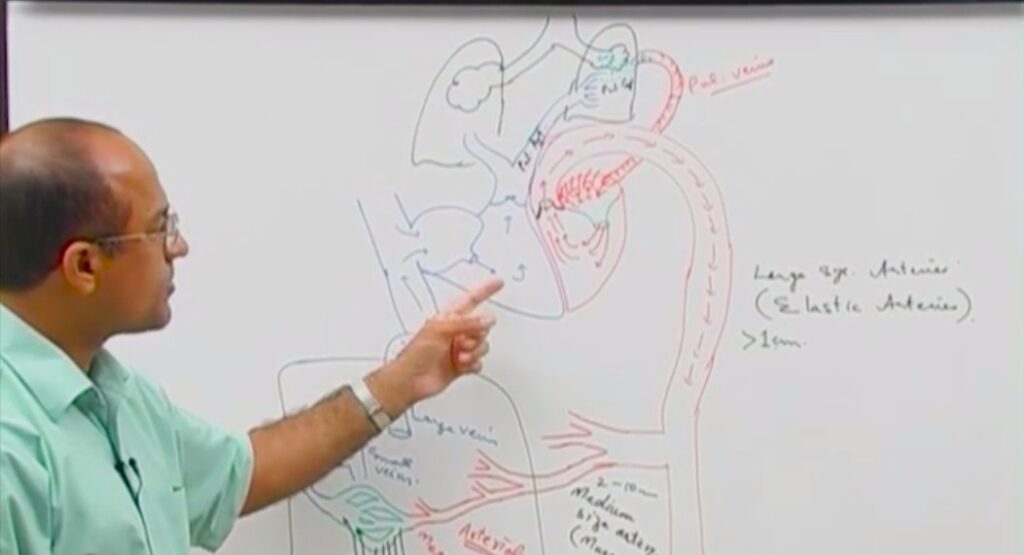
Vascular disease is the leading cause of death worldwide, and nearly every cardiovascular emergency begins in the wall of an artery. Dr. Najeeb’s Vascular Pathology course starts where that story starts, with the structure of the normal vessel, then shows how hypertension, atherosclerosis, aneurysm and inflammation each damage it in a different way. Across 24 hand-drawn lectures, every disease is linked to the layer it attacks. The course is taught by a teacher with over 40 years of experience.
| At a glance | Vascular Pathology |
|---|---|
| Instructor | Dr. Najeeb, over 40 years of teaching experience |
| Course length | 24 video lecture parts in 5 modules |
| Teaching style | Live whiteboard drawing, one idea at a time |
| Prior knowledge | No background needed; the lectures begin with the histology of blood vessels |
| Access | Lifetime access with the premium plan, future lectures included |
| Notes | Handwritten notes for every lecture, sold separately (Notes add-on or Combo Plan) |
| Free preview | Sample lectures through a free “Try Us Free” account |
| Ideal for | Medical, dental, nursing and pharmacy students; USMLE Step 1, PLAB, COMLEX and NEET PG candidates |
What makes this vascular pathology course different
Vessel disease is simple once you know the layers of the wall. These lectures keep that picture in front of you throughout.
- Normal vessel histology comes first, so every pathological change has a reference point.
- Atherosclerosis is drawn as a sequence, from endothelial injury to the complicated plaque.
- Aneurysm, dissection and Marfan syndrome are connected through the wall defect they share.
- Vasculitis is organized by vessel size, which turns a long list into a clear framework.
- Handwritten notes for every lecture give you a clear revision set.
Skills and knowledge you will gain
- Describe the structure of arteries, veins and capillaries
- Explain how hypertension damages vessels
- Describe the pathogenesis and complications of atherosclerosis
- Distinguish true and false aneurysms and explain aortic dissection
- Explain the vascular features of Marfan syndrome
- Classify vasculitis by the size of the vessel affected
- Describe benign and malignant vascular tumors
Clinical connections along the way
- Hypertension and end-organ damage
- Atherosclerotic plaque rupture and thrombosis
- Abdominal aortic aneurysm
- Aortic dissection
- Giant cell arteritis and other vasculitides
- Hemangioma and angiosarcoma
Inside the course: 24 lectures in 5 modules
| Module | Topics (number of lecture parts) | Parts |
|---|---|---|
| 1. Vessel structure | Histology of the Cardiovascular System (4) | 4 |
| 2. Hypertension and atherosclerosis | Hypertension (4); Atherosclerosis (5) | 9 |
| 3. Aneurysm and dissection | Aneurysms (2); Marfan Syndrome (1); Aortic Dissection (1) | 4 |
| 4. Vasculitis | Vasculitis (4) | 4 |
| 5. Vascular tumors | Vascular Tumors (3) | 3 |
Total: 24 lecture parts.
Who benefits most
- Medical students meeting vascular pathology for the first time
- Nursing and pharmacy students who need to understand vessel disease
- Anyone revising atherosclerosis and vasculitis before an exam
- Candidates preparing for USMLE Step 1, PLAB, COMLEX or NEET PG
If vasculitis has always felt like a list of names, the size-based framework in the course makes it manageable.
A smart way to study vascular pathology
- Learn vessel histology before any pathology.
- Draw the atherosclerosis sequence from memory.
- Study aneurysm, dissection and Marfan syndrome together.
- Use the handwritten notes for same-day revision.
These courses connect naturally with Vascular Pathology: Vascular Physiology for blood pressure and hemodynamics, Cardiac Pathology for ischemic heart disease, Histology for the layers of the vessel wall, General Pathology for inflammation and cell injury and Immunology for the immune basis of vasculitis.
Fast answers on vascular pathology
What are the layers of an artery?
An artery has three layers: the tunica intima with its endothelial lining, the tunica media of smooth muscle and elastic tissue, and the tunica adventitia of connective tissue.
How does atherosclerosis develop?
Endothelial injury allows lipids to enter the intima, where macrophages engulf them and become foam cells. Smooth muscle cells migrate and form a fibrous cap, and rupture of the plaque can trigger thrombosis.
What are the main risk factors for atherosclerosis?
Major risk factors include hypertension, smoking, diabetes mellitus, high LDL cholesterol, age, male sex and a family history of early vascular disease.
What is the difference between a true and a false aneurysm?
A true aneurysm involves all three layers of the vessel wall. A false aneurysm is a contained rupture in which blood is held by surrounding tissue.
What happens in aortic dissection?
An intimal tear allows blood to enter the media and split the wall layers. Hypertension and Marfan syndrome are major risk factors, and patients classically have sudden, tearing chest or back pain.
What causes Marfan syndrome?
Marfan syndrome is an autosomal dominant condition caused by mutations in the fibrillin-1 gene. It leads to aortic root dilation, lens dislocation and skeletal features.
How is vasculitis classified?
Vasculitis is classified by the size of the vessel involved: large (giant cell arteritis, Takayasu arteritis), medium (polyarteritis nodosa, Kawasaki disease) and small (such as granulomatosis with polyangiitis).
Everything students ask before they start
Do I need prior knowledge before starting vascular pathology?
No. The course begins with the histology of blood vessels, so a beginner can follow it. If you already know the basics, it works well as a rapid revision of atherosclerosis, aneurysm and vasculitis.
How long is the vascular pathology course?
The course contains 24 lecture parts organized into 5 modules.
Which topics does the vascular pathology course cover?
It covers the histology of the cardiovascular system, hypertension, atherosclerosis, aneurysms, Marfan syndrome, aortic dissection, vasculitis and vascular tumors.
Can I try some lectures before I buy?
Yes. A free Try Us Free account lets you watch sample lectures first, so you can judge the teaching style before you subscribe.
Do the lectures come with notes?
Yes. Handwritten notes are available for every lecture in this course. They are sold separately through the Notes add-on or the Combo Plan.
How long do I keep access to the lectures?
Access lasts for life on the premium plan, and it includes lectures that are added in the future.
Can I watch the lectures offline?
You can watch offline only through the official Dr. Najeeb Lectures app. Separate video files are not available for download.
Will this course help with USMLE, PLAB, COMLEX or NEET PG?
It covers the vascular pathology content that these exams test. It does not include a question bank or a certificate.
Can I get a refund?
A 7-day refund is available. To request it, email support@drnajeeblectures.com.